


When clients ask me about blackout blinds in 2025, I always start with a question: "What problem are you really trying to solve?" After 15 years of consulting on window treatments, I've learned that these seemingly perfect solutions come with trade-offs most homeowners don't discover until installation day—or worse, months later when the hidden costs emerge.
Blackout blinds promise complete darkness, but the reality involves thermal stress fractures, disrupted sleep cycles, and maintenance headaches that standard roller shades simply don't create. Let me walk you through what the marketing materials won't tell you.
- The Binary Light Control Problem
- Circadian Rhythm & Sleep Inertia
- Thermal Stress Fractures (Glass Breakage)
- Indoor Air Quality & Off-Gassing
- Condensation-Driven Mold Growth
- Mechanical Failure Rates
- The Light Gap Phenomenon
- Cleaning and Maintenance Challenges
- Total Cost of Ownership Analysis
- When Blackout Blinds Make Sense
The Binary Light Control Problem
The most immediate disadvantage of blackout blinds is their all-or-nothing approach to daylight. Unlike sheer curtains or dual roller systems, you're working with two states: fully open or cave-like darkness.
I had a client in Portland last spring who installed blackout roller blinds in her home office. She wanted darkness for video calls but quickly realized she'd eliminated the natural light that made the space livable. When closed during afternoon meetings, the room required artificial lighting even on sunny days. This created what I call "perceptual darkness fatigue"—that heavy, oppressive feeling you get in windowless spaces.
The human eye needs gradual light transitions. Standard cellular shades with 20-30% light filtering maintain privacy while preserving what chronobiology researchers call "environmental light cues." Blackout fabrics eliminate these cues entirely, which brings us to a more serious concern.
Circadian Rhythm Disruption and Sleep Inertia
Here's where blackout blinds create a physiological paradox. The pitch-black environment helps you fall asleep by supporting melatonin production, but it sabotages your wake-up process.
Your suprachiasmatic nucleus (SCN)—the brain's master clock—relies on dawn light penetrating closed eyelids to trigger cortisol awakening response. When blackout blinds block this signal completely, you wake up in the same darkness you fell asleep in. This is why so many users report severe grogginess lasting 2-3 hours after waking, a condition sleep scientists call "sleep inertia."
A 2024 sleep survey found that 41% of blackout blind users struggle to wake on weekdays, compared to 23% using light-filtering shades. I've seen this pattern repeatedly: clients install blackout cellular shades for better sleep, then rely increasingly on harsh alarm clocks and caffeine to overcome the morning fog they've created.
The solution isn't more darkness—it's strategic darkness. Top-down bottom-up shades let you block street lights at eye level while allowing dawn's natural gradient through the upper window section.
Thermal Stress Fractures in Insulated Glass Units
This is the disadvantage most homeowners never anticipate: blackout blinds can shatter your windows.
Dark blackout fabrics absorb 70-85% of solar radiation and convert it to heat. When installed close to glass (inside mount or tight fit), they create a thermal trap between fabric and window. The glass center heats rapidly—sometimes reaching 140-160°F on south-facing exposures—while the edges remain cooler within the frame.
When this temperature differential (ΔT) exceeds 30-40°C in standard annealed glass, the thermal expansion stress exceeds the glass's tensile strength. The result is spontaneous fracture, typically starting at the edge and propagating perpendicular across the pane.
| Risk Factor | Description | Relative Risk Multiplier |
|---|---|---|
| Glass Type | Standard annealed float glass | 3.5x baseline |
| Mounting | Inside mount / tight fit (no air gap) | 4.2x baseline |
| Orientation | South-facing or west-facing | 5.8x baseline |
| Glass Assembly | Double-pane IGU with Low-E coating | 6.1x baseline |
| Partial Coverage | Blind covers only 40-60% of glass | 7.3x baseline |
I've witnessed this firsthand. A Seattle family installed suction-cup portable blackout blinds on their nursery's double-glazed windows in July 2023. Within 48 hours, both panes developed stress cracks radiating from the bottom corners. The replacement cost: $1,400 per window, plus emergency glazing service fees.
Pro tip: If you must use blackout blinds with IGUs, choose outside mount installation with minimum 3-inch clearance from the glass, and select light-colored or reflective-backed fabrics that reject rather than absorb solar heat.
Indoor Air Quality Degradation from PVC Off-Gassing
Most budget and mid-range blackout blinds achieve opacity through polyvinyl chloride (PVC) coatings on fiberglass or polyester scrims. This is where material chemistry becomes a health concern.
PVC requires plasticizers—typically phthalates—to maintain flexibility for rolling mechanisms. These semi-volatile organic compounds (SVOCs) don't chemically bond to the polymer matrix; they migrate to the surface over time and volatilize when heated.
The irony is brutal: blackout blinds block sunlight, which means they absorb massive solar heat (surface temperatures of 140-150°F are common). This heat accelerates off-gassing of residual monomers, phthalates, and volatile organic compounds (VOCs) including phenol, formaldehyde, and various hydrocarbons.
You smell this as "new plastic odor"—what toxicologists call "acute VOC exposure." In a child's nursery with limited air exchange, this creates a concerning exposure scenario. Phthalates are confirmed endocrine disruptors linked to developmental issues and reproductive toxicity. While children's toys face strict phthalate regulations, window coverings often slip through oversight gaps.
I always specify PVC-free blackout alternatives for clients with young children: 100% polyester three-layer woven fabrics or acrylic foam-backed textiles that carry GREENGUARD Gold certification. These cost 25-35% more but eliminate the off-gassing risk entirely.
Condensation-Driven Mold Growth
Here's a disadvantage that compounds over time: blackout blinds create ideal conditions for microbial colonization.
The problem stems from their high density and thermal insulation properties. In winter, blackout cellular shades or roller blinds block radiant heat from reaching the window glass. The inner glass surface drops below the room's dew point temperature, causing rapid condensation when humid indoor air contacts the cold glass.
Unlike aluminum blinds or plantation shutters that allow continuous airflow, blackout fabrics trap this moisture against the glass or within their cellular structure. The fabric's texture and accumulated organic dust particles provide both moisture and nutrient sources for mold species—particularly Stachybotrys chartarum (black mold) and Aspergillus niger.
I've removed blackout honeycomb shades in San Francisco Bay Area homes that looked pristine from the room side but harbored black mold colonies within the cellular pockets facing the glass. The homeowners had no idea until their children developed persistent respiratory irritation.
Mechanical Failure Rates and Operational Issues
The engineering challenge of blackout blinds is simple physics: opacity requires density, and density means weight.
Three-layer blackout fabrics with acrylic foam backing or rubber coatings typically weigh 8-12 oz per square yard—double the weight of standard solar screen fabric. This mass creates cascading mechanical problems:
- Clutch and brake failures: The plastic ratchet mechanisms in spring-loaded roller shades aren't engineered for this sustained load. I've replaced clutches on blackout roller blinds within 18-24 months of installation, whereas standard shades typically last 5-7 years before component wear becomes noticeable.
- Telescoping and edge fraying: Heavy blackout fabrics are unforgiving of installation errors. If the mounting brackets have even 1-2 degrees of tilt, the fabric rolls unevenly—what installers call "telescoping." The shifted fabric edge then scrapes against the bracket, causing fraying and weakening the selvedge. Once started, this deterioration accelerates rapidly.
- Motorization costs: If you want automated blackout blinds, the heavier fabric requires higher-torque tubular motors. Battery-powered options drain quickly (replacing batteries every 4-6 months versus annually for standard shades), often forcing expensive hardwired installation.
The Light Gap Phenomenon
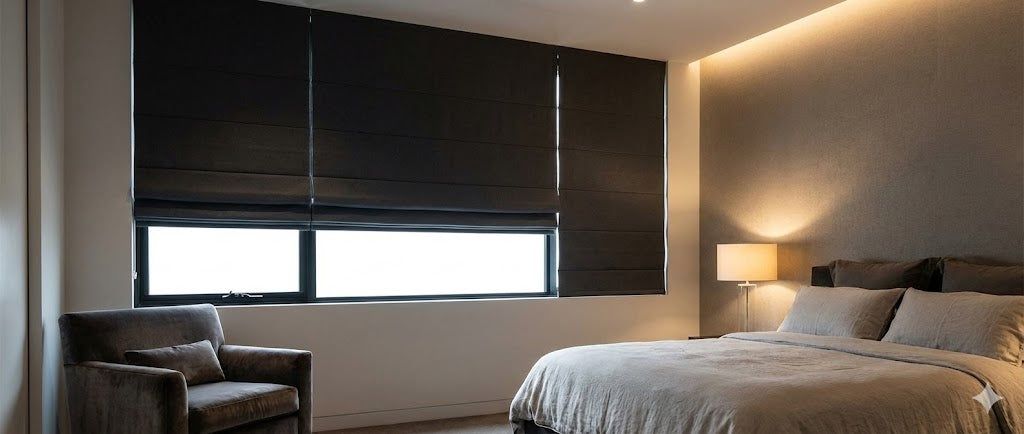
One of the most frustrating disadvantages of blackout blinds is that they rarely deliver the 100% darkness promised in marketing materials.
Roller blinds and cellular shades require mechanical tolerances to operate without friction. This means the fabric must be 1.5-2.5 cm narrower than the window opening to prevent edge binding during raising and lowering. These side gaps become "light leaks" that glow intensely once your eyes adapt to darkness.
After 30 minutes in a dark bedroom, your pupils dilate to maximum aperture. Those narrow side gaps now appear as brilliant stripes of light—what I call the "halo effect." This high-contrast edge lighting is often more disruptive than diffuse ambient light would be.
| Leakage Location | Typical Gap Width | Mitigation Strategy | Cost Impact |
|---|---|---|---|
| Side edges (roller/cellular) | 0.6-1.0 inches | Side channel system | +60-75% |
| Bottom rail | 0.25-0.5 inches | Magnetic seal / U-channel | +30-40% |
| Top cassette/valance | 0.125-0.25 inches | Light-blocking fascia | +15-25% |
Cleaning and Maintenance Challenges
The coating chemistry that makes blackout blinds opaque also makes them nearly impossible to clean properly.
Most blackout roller shades feature rubber or acrylic backing applied through heat lamination or chemical adhesive. These backings are extremely sensitive to both water and dry-cleaning solvents:
- Water immersion causes hydrolysis of the adhesive bond, leading to bubbling, delamination, or the coating becoming tacky and self-adhesive when wet.
- Traditional dry-cleaning solvents (perchloroethylene) extract plasticizers from the coating, causing it to harden, crack, and flake off.
- Machine washing subjects the laminated layers to mechanical agitation that their thermal expansion mismatch can't tolerate—the fabric and backing expand differently, causing permanent buckling.
Manufacturers typically specify "surface cleaning only"—gentle dusting or damp cloth wiping. This is inadequate for accumulated grease (especially in kitchens), mold spots, or embedded dust that builds up over 3-5 years of use.
Total Cost of Ownership Analysis
While entry-level blackout roller blinds seem affordable ($40-80 for standard window sizes), achieving functional blackout performance without the disadvantages discussed above requires significant investment:
| System Component | Budget Blackout | Quality Blackout | Dual-Layer Alternative |
|---|---|---|---|
| Base blind (36"×60") | $45-65 | $120-180 | $85-130 |
| Side channels/tracks | N/A | $80-120 | Not required |
| PVC-free fabric upgrade | N/A | +$40-60 | Included |
| Expected lifespan | 3-5 years | 7-10 years | 8-12 years |
| Total 10-year cost | $265-530 (+risk) | $365-535 | $285-410 |
When Blackout Blinds Make Sense (and When They Don't)
After evaluating the comprehensive disadvantage list, you might wonder if blackout blinds ever make sense. The answer depends entirely on your specific situation and priorities.
Appropriate applications:
- Dedicated home theater or media rooms where complete darkness enhances viewing experience.
- Bedrooms for night-shift workers who sleep during daylight hours.
- Rooms with severe light pollution (neon signs, street lights, headlights).
- Clinical settings requiring light control (photography darkrooms, medical facilities).
Poor fits:
- Children's nurseries (due to circadian disruption and VOC exposure concerns).
- Primary bedrooms for standard sleepers (morning wake-up difficulties outweigh benefits).
- Living spaces where natural light supports daytime activities and mood.
- Windows with IGU assemblies and direct sun exposure (thermal fracture risk).
- Historic or architecturally significant homes where exterior aesthetics matter.
The Bottom Line: Blackout blinds aren't inherently bad products—they're specialized solutions with significant trade-offs that marketing materials rarely emphasize. The disadvantages range from minor inconveniences (limited aesthetic options, visible dust) to serious concerns (thermal glass fracture, circadian rhythm disruption, indoor air quality degradation). When clients insist on complete darkness, I walk them through the risk mitigation checklist. The key is making that decision with complete information—something you now have.

Leave a comment
This site is protected by hCaptcha and the hCaptcha Privacy Policy and Terms of Service apply.